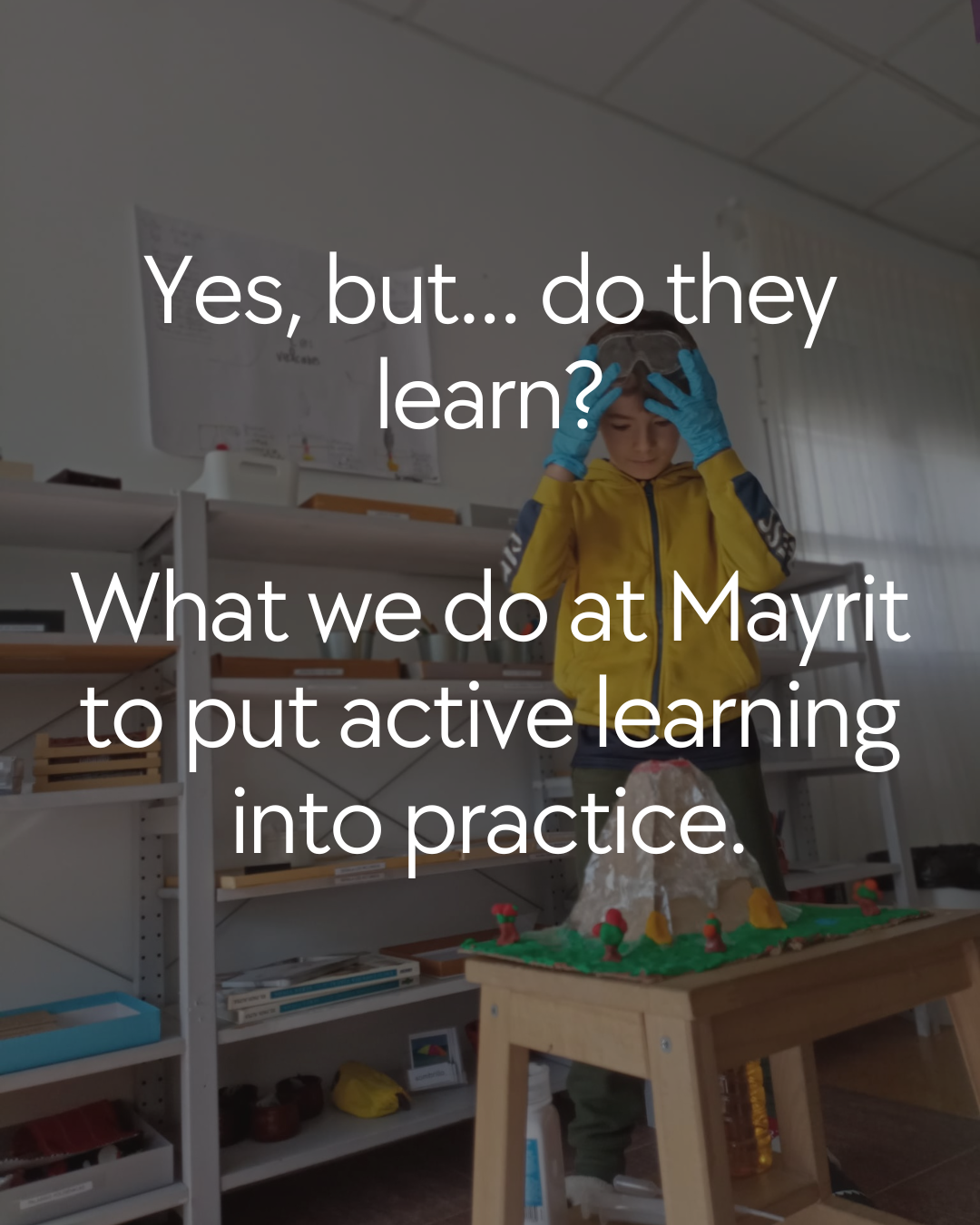
“Yes, but… do they learn?” We are launching this series of posts to break down what actually happens in the daily life of an active pedagogical model, and how respecting individual rhythms is, in fact, the most efficient accelerator for meaningful learning.
In the field of human development, standardization is a myth. Demanding exactly the same from every individual at the exact same time ignores both neurodevelopmental reality and the emotional context of each student.
At Mayrit, as a Nursery and Primary school, respecting these rhythms translates into daily pedagogical decisions tailored to each stage:
Supporting vs. Forcing: We care for and protect spaces for play, free movement, and emotional accompaniment at all ages, understanding them as essential cognitive and developmental tools, rather than “rewards” after work.
Regulation strategies: We modify proposals and spaces based on observation. If a child needs movement to focus or process, movement is permitted, supported, and channeled within the classroom.
Contextual assessment: Daily demands and challenges are adjusted not only to chronological age, but also to personal history, executive maturity, and the emotional state of the moment.
What real life skills are developed through this approach?
Progressive self-regulation capacity.
Healthy frustration management.
Self-confidence and security in one’s own learning processes.
Ability to identify needs and ask for help assertively.
Real learning requires time, security, and an environment that supports without suffocating. Growing up without the constant feeling of “running late” or “doing it wrong” is the foundation of strong mental health.
Do you think the current educational system is ready to abandon the rigidity of traditional chronological standards? You can swipe through the image carousel to learn more details about our approach.